

Snapshot: Hump Day
Animal Locomotion and the science of movement

Snapshots are short, weekly posts (usually on a Wednesday, life permitting) about a photo/grapher. They are free to read because art should be enjoyed by all!

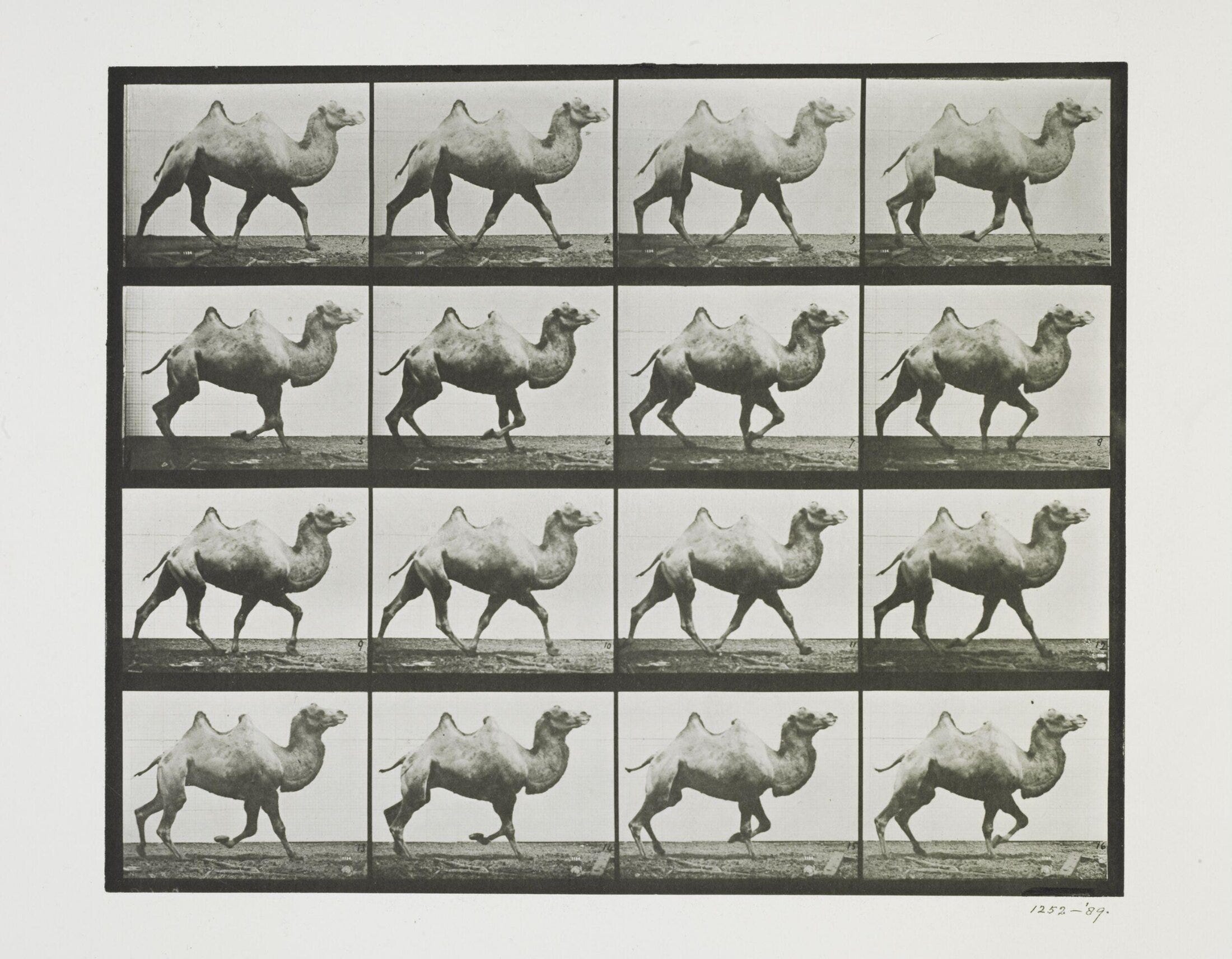
I’m actually pretty allergic to the phrase ‘hump day’ and I’m literally allergic to camels1, but I love this picture.
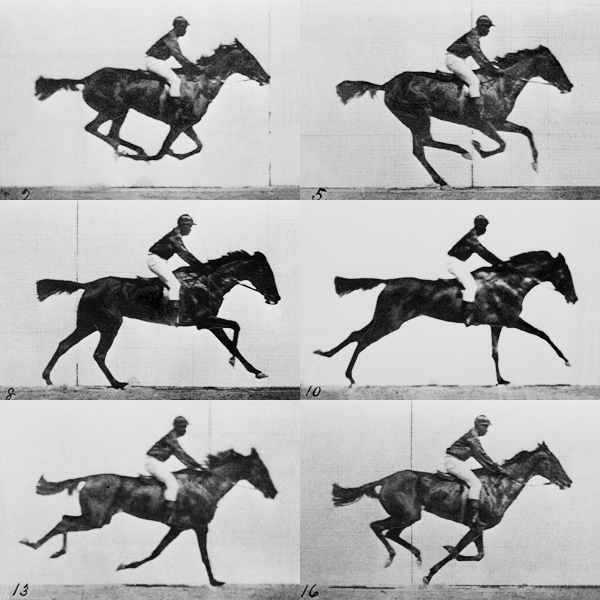
In 1872, Leland Stanford was looking to settle a bet. The businessman and racehorse owner had wagered that a trotting horse had all four legs off the ground for a brief moment in time, one that passed too quickly for the naked eye to see. Enter Eadweard Muybridge, an English landscape photographer who had emigrated to America. Muybridge used a bank of cameras (up to 36 in total) to make split-second shots of a horse while it was trotting, capturing images of the individual stages of movement that had never been seen before by the human eye. Muybridge proved Stanford right, winning him the bet and simultaneously revolutionising photography (and the science of movement) in the process.
A passion ignited, the artist/innovator went on to work with the Philadelphia Zoo, using the same technique to photograph lions, eagles, ostriches, gazelles, sloths, camels and more. The end result was a collection of over 20,000 photographs, entitled ‘Animal Locomotion’, and a historic contribution to both arts and science.
I discovered this on the first day of a two-week camel trek across the Sinai desert.